Industrial Automation and Control System Integration: A Practical Guide
Very few industrial plants were designed in one sitting. A line gets added, a packaging cell gets retrofitted, a new filler arrives with its own proprietary controller, and fifteen years later the facility is running on equipment from a dozen vendors that were never designed to speak to one another. Control system integration is the engineering discipline that makes them speak, and it is the reason specialist integrators exist at all. Pacific Blue Engineering is one example: a control system integrator building tailored automation solutions for manufacturing, food and beverage, life sciences, entertainment, and transportation, with scada system integration among the services it uses to pull scattered equipment into one visible, controllable system.
That is the short version. The longer version is worth understanding before you commission a project, because integration work is bought badly more often than it is done badly. This guide covers what control system integration actually involves, the legacy problem it usually starts with, where SCADA sits in the picture, how the requirements shift from one industry to the next, and what separates an integrator worth hiring from one who will hand you a system nobody can maintain.
What Control System Integration Actually Means
Industrial automation is the equipment layer: the sensors, drives, motors, robots, and programmable logic controllers that physically do the work. Integration is the layer above it. It is the work of making independently designed machines behave as one coordinated process, with consistent data, predictable handoffs, and a single place to see what is happening.
In practice that covers controller programming and standardization, network architecture, HMI and SCADA design, safety system design, motion and drive configuration, database and reporting layers, and the commissioning work that proves the whole thing runs before the line restarts. The deliverable is not a product. It is a system that matches one plant's process, one plant's constraints, and one plant's maintenance capability.
This is the distinction that decides whether a project succeeds: automation is something you buy, integration is something you design. Two plants can install identical hardware and end up with wildly different results, because the value sits in how the pieces were specified, sequenced, programmed, and documented.
It is also why "we already have PLCs" is not an answer to "is your plant integrated?" Equipment presence and system coherence are different things.
The Legacy Problem Most Plants Are Sitting On
Most integration projects do not begin with a greenfield build. They begin with a plant that works, mostly, on controls that are quietly running out of road. The machinery is often fine. Industrial mechanical equipment regularly outlives three generations of the electronics bolted to it, which is exactly how a sound twenty-year-old line ends up dependent on a controller nobody sells any more.
Signs Your Controls Are Overdue for Modernization
- Discontinued controllers: platforms such as the PLC-5 and SLC 500 families have been retired by their manufacturers, so spares increasingly come from brokers and auction sites rather than distributors.
- Unsupported operator stations: HMIs running on operating systems that stopped receiving security patches years ago, often with no clean upgrade path.
- Undocumented logic: ladder code written by a contractor who left in 2009, with no comments, no version control, and no backup anybody has tested restoring.
- Serial islands: legacy fieldbus and point-to-point serial links that cannot be bridged to anything modern without a translation layer.
- Single points of knowledge: one technician who understands the sequence, and a plant that effectively stops when that person is on leave.
Modernizing legacy controls is rarely a rip-and-replace exercise, because the production schedule will not allow it. The realistic approach is phased: migrate the controller platform, keep the field wiring and proven mechanical sequences where they still serve, introduce modern networking, and carry the process knowledge embedded in the old logic forward into something documented and maintainable. The risk being managed is not technical failure so much as unplanned downtime during the transition.
Where SCADA Fits in the Control Stack
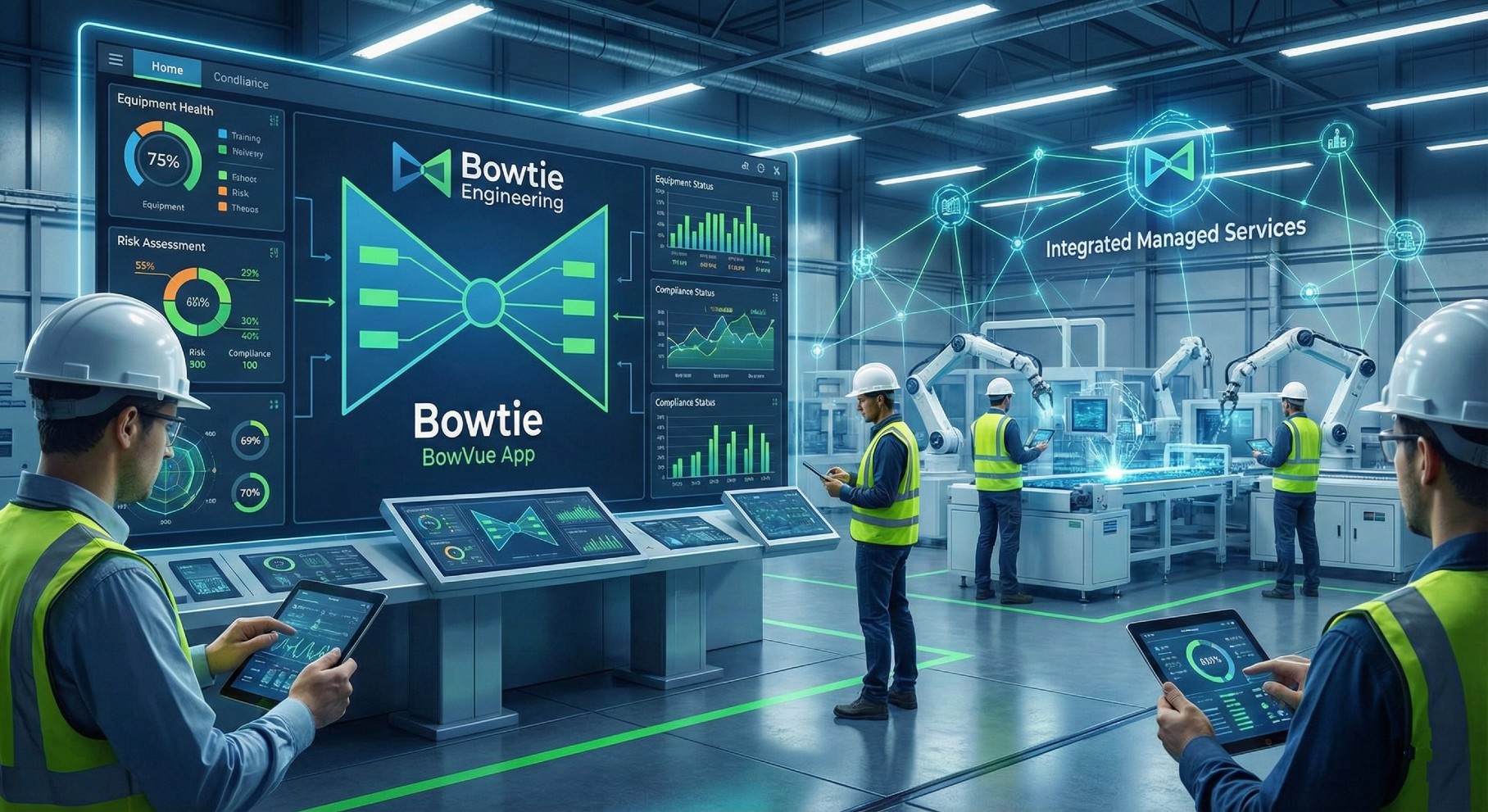
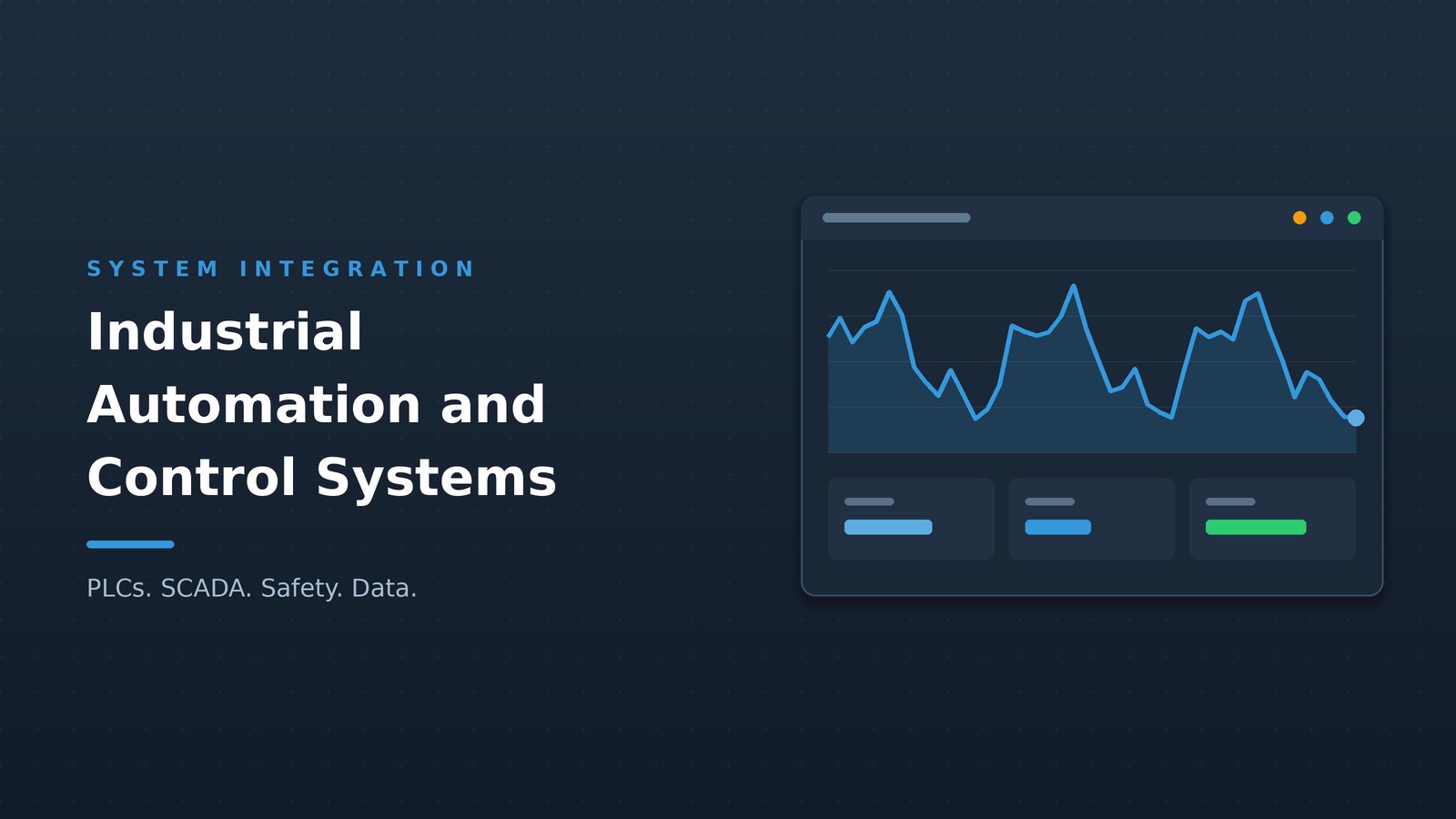
It helps to be precise about the layers, because the terms get used loosely. PLCs execute deterministic control at the machine. HMIs give the operator local interaction with one machine or cell. SCADA, supervisory control and data acquisition, sits above both: it aggregates across machines, lines, and sometimes sites, giving supervisory visibility, alarm management, trending, and historical data.
That supervisory layer is where most of the operational insight comes from. A PLC knows the current state of its own machine. A SCADA system knows how that machine behaved across the last six months, how it interacts with everything upstream and downstream, which alarms repeat, and which shift patterns correlate with scrap. Standards such as OPC UA and MQTT with Sparkplug B exist precisely so that this layer can collect data from mixed-vendor equipment without a bespoke driver for every device.
A plant does not have a data problem. Its controllers are already generating more data than anyone reads. What it usually lacks is a supervisory layer that collects that data in a consistent structure, retains it long enough to show a trend, and presents it to the people who can act on it.
Spotlight on Pacific Blue Engineering
Pacific Blue Engineering works across this whole stack as a control system integrator, which is a useful illustration of what the role covers in practice. The work spans manufacturing, food and beverage, life sciences, entertainment, and transportation, and the common thread is that each engagement is specified around one client's process rather than assembled from a standard product catalogue.
The stated aims map closely to the problems above: optimizing production processes, modernizing legacy control systems, improving machine safety, enhancing product quality, reducing operational risk, and giving businesses genuine operational insight through advanced systems engineering and automation technologies. That combination matters, because these objectives are not separable in a real plant. A safety retrofit changes the control sequence. A controller migration is the natural moment to add the data collection that was never there. Treating them as one engineering problem is what integration means.
What Integration Looks Like Across Industries
The engineering fundamentals carry over between sectors. The constraints do not, and the constraints are usually what shape the design.
Manufacturing
Throughput and changeover dominate. The questions are cycle time, bottleneck identification, scrap reduction, and how quickly a line can be reconfigured for a different product without reprogramming from scratch. Consistent controller standards across machines pay for themselves every time a line is modified.
Food and Beverage
Sanitation, allergen changeover, and traceability drive the design. Clean-in-place sequences have to be verifiable, batch records have to tie finished goods back to ingredient lots, and the control system has to make a recall a query rather than a search through paperwork.
Life Sciences
Here the documentation is part of the deliverable. Systems handling regulated product must support electronic records and signatures, follow structured validation through installation, operational, and performance qualification, and demonstrate that changes were controlled. An undocumented change is a compliance finding, not just bad practice.
Entertainment
Ride and show control carry an unusual combination: safety-rated control of motion that carries members of the public, synchronized precisely with lighting, audio, and effects, running on a schedule with no tolerance for downtime during operating hours.
Transportation
Systems such as baggage handling, tunnel ventilation, and terminal infrastructure run continuously, span long physical distances, and often cannot be taken offline for upgrades. Redundancy, remote diagnostics, and phased cutover planning matter more than peak performance.
Machine Safety Belongs in the Design, Not the Retrofit
Machine safety is the area where integration quality shows most clearly, because the cheap approach and the correct approach look similar on a drawing and behave very differently in an incident.
Modern practice treats safety as a designed function with a measurable performance target, assessed against the actual risk of the machine, using standards such as ISO 13849 and IEC 62061. That means a documented risk assessment first, then a safety architecture chosen to meet the required performance level, implemented with rated components and safety-rated controllers, and validated before the guard doors close.
The practical argument for building this in rather than bolting it on is that badly implemented safety gets defeated. If a light curtain stops the line every time an operator reaches for a part they need to reach for, somebody will eventually tape over it. Safety that is designed around how the machine is genuinely used survives contact with the production floor. Safety that ignores the operator does not, and a defeated safety device protects nobody while creating the false impression that the risk is handled.
Quality, Consistency, and the Traceability Trail
Product quality is largely a consistency problem, and consistency is what automation is good at. A manual process has an operator's judgement in it, which varies by person, by shift, and by how long they have been on their feet. An integrated control system applies the same setpoints, the same dwell times, and the same sequence every cycle, and records that it did.
The recording is the underrated half. When control data is captured against batch or serial identity, quality investigation changes character completely. Rather than asking whether a process drifted, you can look at exactly what the temperature, pressure, and cycle time were for the specific lot a customer is complaining about. In regulated sectors that trail is mandatory. In everything else it is simply the difference between diagnosing a problem in an afternoon and arguing about it for a month.
Turning Control Data Into Operational Insight
Once a supervisory layer exists, the same infrastructure answers business questions that were previously guesswork.
Where the Capacity Actually Goes
Overall equipment effectiveness combines availability, performance, and quality into one figure, and it is frequently a surprise. Plants that assume they have a throughput problem often discover they have an availability problem caused by short, frequent stoppages nobody logged because each one lasted ninety seconds.
Which Failures Repeat
Alarm and fault history turns maintenance from reactive to planned. A fault that recurs every few weeks is invisible in a logbook and obvious in six months of trended data, and fixing the cause is almost always cheaper than absorbing the stoppages.
What the Process Really Costs
Energy consumption, compressed air use, material yield, and utility draw per unit become measurable rather than estimated. These are often the figures that justify the next capital request, because they translate directly into operating cost.
How to Choose a Control System Integrator
Integration is bought on trust, because the buyer frequently cannot evaluate the engineering directly. A few questions separate serious integrators from the rest.
Worth Asking Before You Sign
- Who owns the code? Confirm in writing that you receive documented, commented source for the controllers and the SCADA application. An integrator who retains it has made you a permanent customer by default rather than by merit.
- What are the documentation deliverables? Drawings, network diagrams, I/O schedules, functional descriptions, and a tested backup and restore procedure. Specify them before the work starts, not at handover.
- Can they work with your installed base? Vendor-independent integrators specify what fits the process. Single-vendor shops tend to specify what they stock.
- Does the team hold the safety competence in-house? Risk assessment and functional safety design are specialist skills, not something to subcontract quietly.
- How will they commission around your schedule? Phased cutover, simulation and factory acceptance testing, and a tested rollback plan are what keep a migration from becoming an outage.
- Can they show sector-relevant work? Regulated and public-facing environments carry requirements that general experience does not cover.
Key takeaway: You are not buying hardware. You are buying an engineered system plus the documentation that lets your own team run it for the next decade. Judge proposals on what you will own at the end, not on the equipment list.
Conclusion: Integration Is an Engineering Problem
The plants that get the most from automation are rarely the ones with the newest equipment. They are the ones whose systems were designed to work together, documented well enough to maintain, made safe in a way that operators accept, and instrumented well enough to show what is really happening.
That is the whole value of control system integration. It takes a collection of machines bought at different times for different reasons and turns them into one process that can be measured, improved, and trusted.
Start with what you want to see, not with what you want to buy.